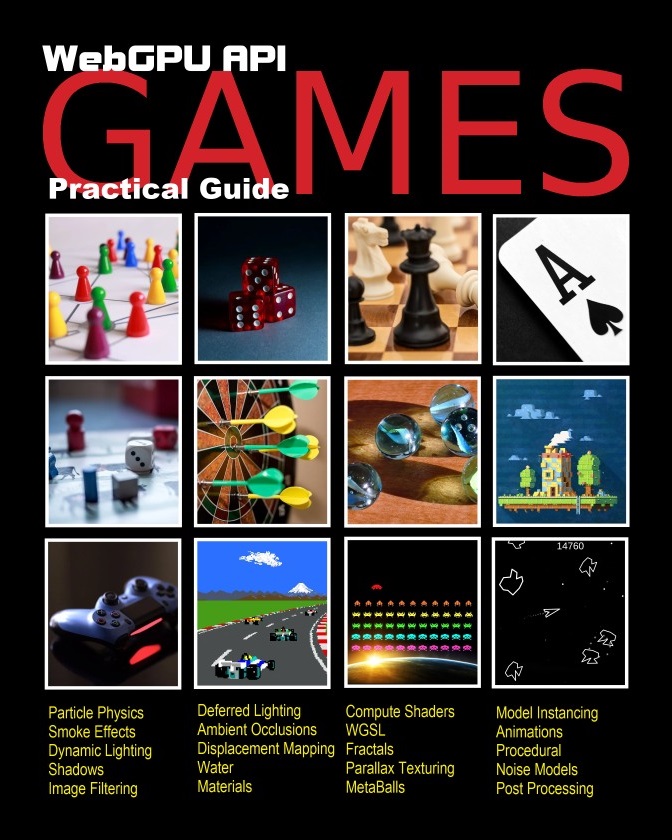
A masterful exploration of webgpu and its impact on the contemporary issues. This essential read offers fresh perspectives and practical insights that will transform your understanding.
The book's title, "WebGPU API Games", reflects its central theme: a bold exploration of ideas that challenge conventional thinking and encourage intellectual growth. The carefully structured chapters build upon each other, creating a learning journey that is both educational and inspiring. Each section includes practical examples and thought-provoking exercises. Readers will appreciate the author's ability to weave storytelling with scholarly insight, creating a rich tapestry of knowledge that is both informative and engaging. This comprehensive work delves deep into the core concepts of webgpu, offering readers a unique perspective that bridges theoretical knowledge with practical application.
I've recommended this book to my entire team. The practical applications have already improved our workflow and outcomes.
Great point! I especially appreciated the chapter on implementation strategies.
May 29, 2026
Each chapter builds on the last with such clarity that I couldn’t put it down.
I loved how the author used personal stories to illustrate key points.
May 21, 2026
A must-read for anyone serious about mastering their craft.
That section was brilliant. I've already applied those techniques with great success.
May 30, 2026That section was brilliant. I've already applied those techniques with great success.
May 22, 2026Stay updated with the latest from the book world
Spotify's successful audiobooks strategy, the most read books on Goodreads, our first ever ZtWR readalong, and more...
Read MoreLots of "best of" lists from around the interwebs, the next big (eye-roll inducing) trend, and more...
Read MoreHere's a sneak peek at the new queer books coming out this month—plus, the best way to keep track of new and upcoming queer books....
Read MoreEnhance your reading and learning experience
Use a pointer or your finger to guide your eyes. This can increase reading speed by 25%.
Take brief notes after each chapter. Summarizing helps cement knowledge.
Use the Feynman Technique: teach what you learn to someone else to identify knowledge gaps.
Rubber Duck Debugging: explain your code line by line to an inanimate object.
Write documentation as if the next person reading it is a violent psychopath who knows where you live.
Create a dedicated reading space with good lighting and minimal distractions.
Sarah Johnson
Professional ReviewerYes! I found the visual summaries at the end of each chapter incredibly helpful.
May 28, 2026