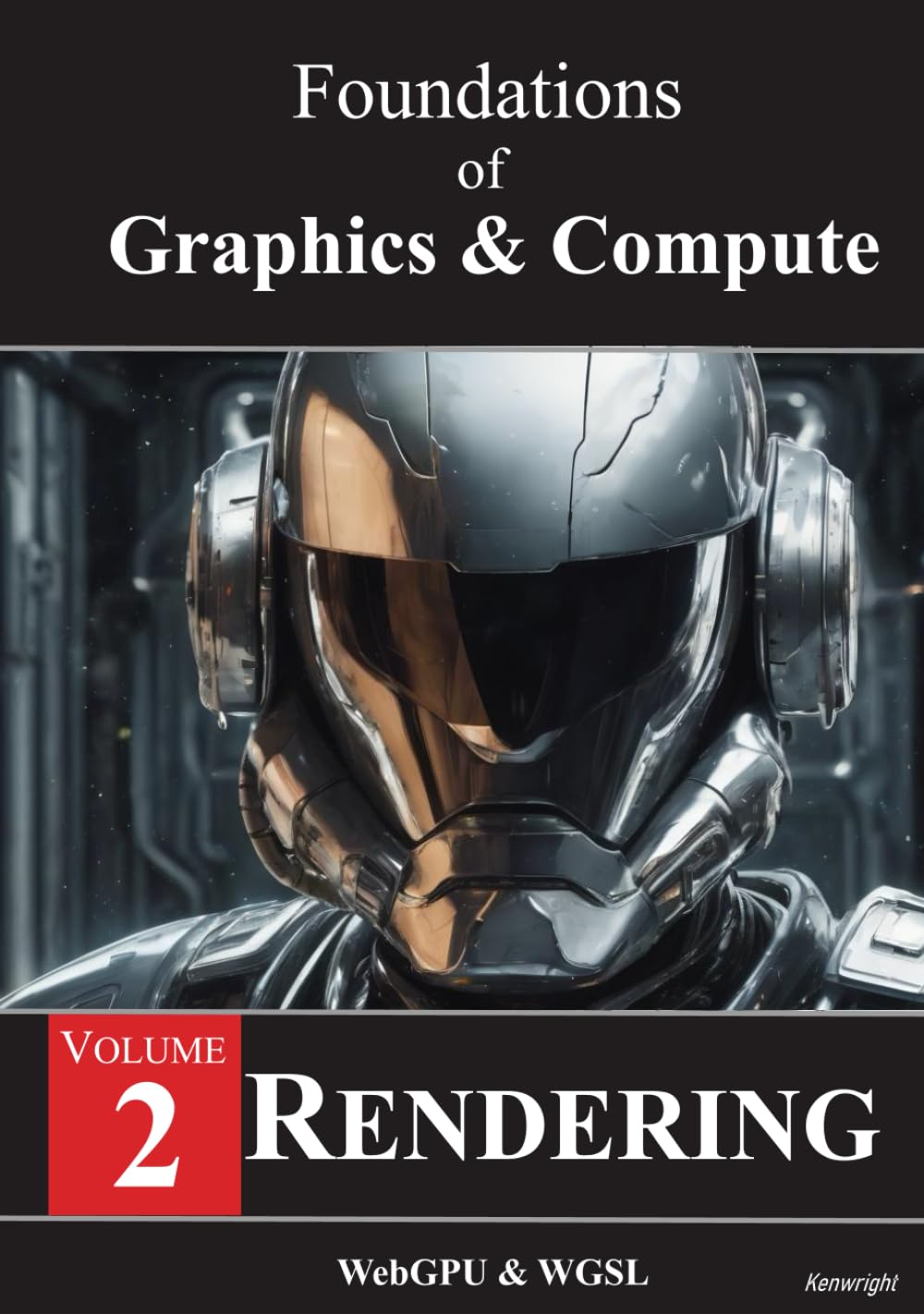
A compelling exploration of webgpu and its impact on the modern technology. This essential read offers fresh perspectives and practical insights that will transform your understanding.
Readers will appreciate the author's ability to weave storytelling with scholarly insight, creating a rich tapestry of knowledge that is both informative and engaging. What sets this book apart is its ability to connect wgsl with real-world scenarios, providing readers with actionable insights they can immediately implement. Drawing inspiration from the challenges and triumphs within graphics, the author crafts a compelling narrative that resonates with readers across diverse backgrounds. Whether you're seeking to deepen your understanding or simply explore new perspectives, "Foundations of Graphics & Compute - Volume 2: Rendering (Hardback)" offers a rewarding experience that lingers long after the final page.
The way complex concepts are broken down into digestible pieces is remarkable. Perfect for beginners yet valuable for experts.
Couldn't agree more. The real-world examples made all the difference for me.
December 13, 2025
I’ve already bought copies for friends and colleagues—it’s that impactful.
Totally agree. The pacing and structure made it easy to stay engaged throughout.
December 11, 2025
I’ve already bought copies for friends and colleagues—it’s that impactful.
Couldn't agree more. The real-world examples made all the difference for me.
December 6, 2025Stay updated with the latest from the book world
Because you asked for it (you ask for it every year). These are the most scathing book reviews of 2025. | Book Marks Why Virginia Woolf thought K...
Read MoreHappy Hanukkah and a merry early Christmas! Hope you’re getting some time to rest, be with friends, and reflect on the year. I’m starting ...
Read MoreThis week, we prepared for year’s end with some golden oldies and nurturing fare. Some of us, like resident home chef James Folta, made miso sou...
Read MoreEnhance your reading and learning experience
Create a dedicated reading space with good lighting and minimal distractions.
Follow the 20-20-20 rule: every 20 minutes, look at something 20 feet away for 20 seconds.
Use the Feynman Technique: teach what you learn to someone else to identify knowledge gaps.
Rubber Duck Debugging: explain your code line by line to an inanimate object.
Write documentation as if the next person reading it is a violent psychopath who knows where you live.
Organize books by color for visual appeal or by genre for practical access.
Sarah Johnson
Professional ReviewerThat section was brilliant. I've already applied those techniques with great success.
December 11, 2025