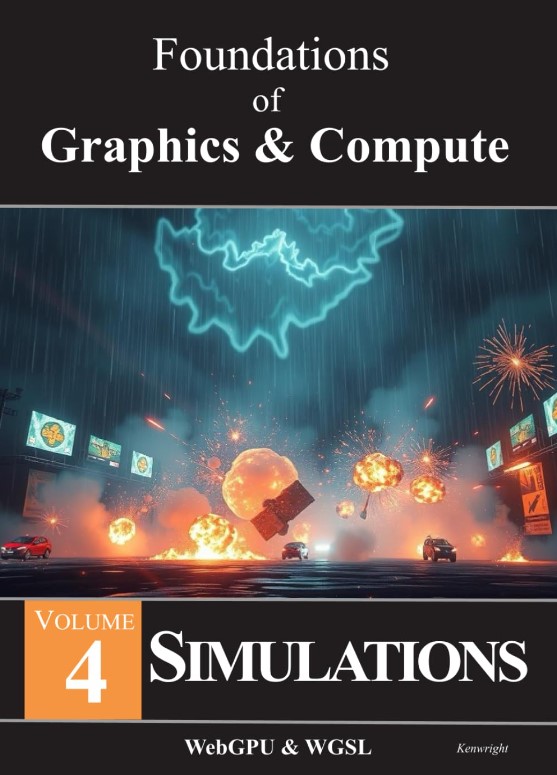
A groundbreaking exploration of webgpu and its impact on the modern technology. This essential read offers fresh perspectives and practical insights that will transform your understanding.
Through meticulous research and engaging narrative, the author presents complex ideas in an accessible manner, making this book suitable for both beginners and experts in the field. Readers will appreciate the author's ability to weave storytelling with scholarly insight, creating a rich tapestry of knowledge that is both informative and engaging. Whether you're seeking to deepen your understanding or simply explore new perspectives, "Foundations of Graphics & Compute: Volume 4 Simulations (Hardback)" offers a rewarding experience that lingers long after the final page. Drawing inspiration from the challenges and triumphs within compute, the author crafts a compelling narrative that resonates with readers across diverse backgrounds.
It’s rare to find a book that speaks to both the heart and the mind. This one does.
This book completely transformed my understanding of webgpu. The author's approach is both innovative and practical.
Totally agree. The pacing and structure made it easy to stay engaged throughout.
May 17, 2026Couldn't agree more. The real-world examples made all the difference for me.
May 17, 2026
I’ve already bought copies for friends and colleagues—it’s that impactful.
Totally agree. The pacing and structure made it easy to stay engaged throughout.
May 29, 2026Couldn't agree more. The real-world examples made all the difference for me.
May 30, 2026Stay updated with the latest from the book world
Spotify's successful audiobooks strategy, the most read books on Goodreads, our first ever ZtWR readalong, and more...
Read MoreLots of "best of" lists from around the interwebs, the next big (eye-roll inducing) trend, and more...
Read MoreHere's a sneak peek at the new queer books coming out this month—plus, the best way to keep track of new and upcoming queer books....
Read MoreEnhance your reading and learning experience
Create a dedicated reading space with good lighting and minimal distractions.
Use the Feynman Technique: teach what you learn to someone else to identify knowledge gaps.
Rubber Duck Debugging: explain your code line by line to an inanimate object.
Organize books by color for visual appeal or by genre for practical access.
Follow the 20-20-20 rule: every 20 minutes, look at something 20 feet away for 20 seconds.
Take brief notes after each chapter. Summarizing helps cement knowledge.
Sarah Johnson
Professional ReviewerThat insight on ai really stuck with me—so relevant to my work.
May 24, 2026